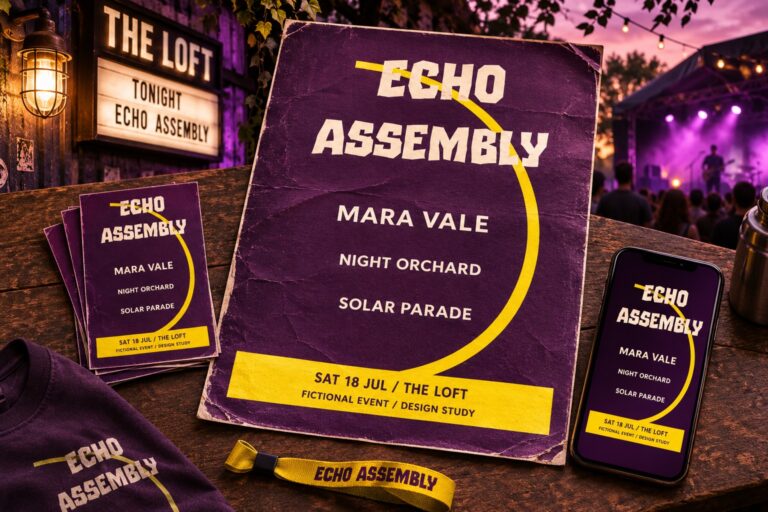
A stream overlay is read while something else is happening. The audience may be following a match, listening to commentary, or watching a creator react. Player names need a dependable position and enough room to remain recognizable when the scene becomes busy.
Start with the longest realistic name, then build the surrounding identity around it. A dramatic event heading can provide character, but the repeated names and scores should be treated as working information. This article uses Lantern Arena, a fictional broadcast, with invented players. The event title uses actual Hulk Comic lettering. All broadcast views are original layout illustrations, not screenshots of a live stream or a streaming application.
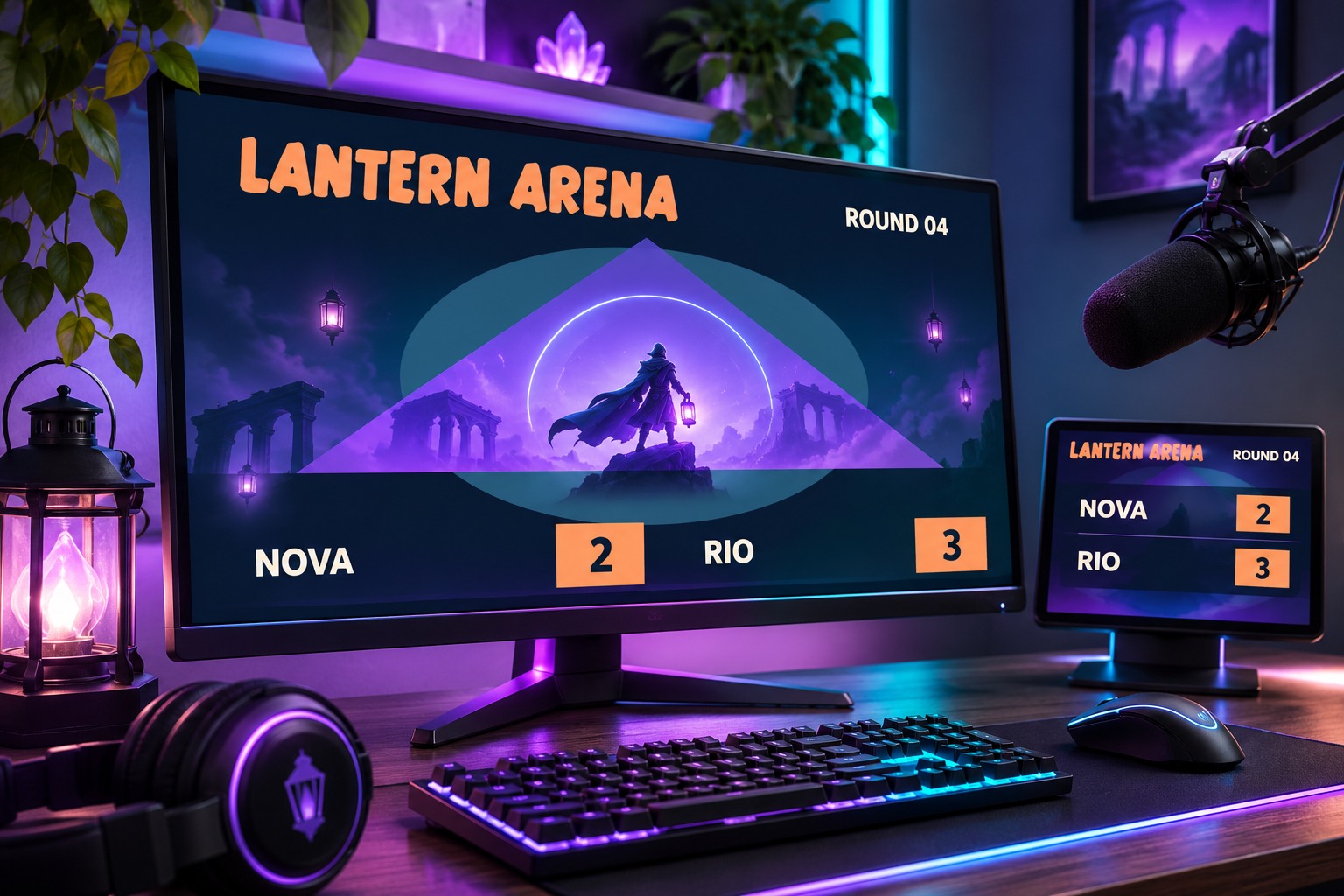
List the information that changes during the show
Write down the fields the operator needs to update: player names, team names, scores, round, match status, and any relevant identification. Distinguish those live fields from fixed identity assets. A field that changes often should be easy to locate and edit without disturbing its neighbors.
Ask who supplies the values and who checks them. A name copied from a registration list may differ from a player's preferred display name. Resolve those differences before the broadcast. Design a clearly labeled practice version with invented data so the team can rehearse updates without accidentally announcing a real result.
Reserve a name area before adding decoration
Use a demanding name at the start. Include a short name, a long name, and punctuation or spacing that is common in the community. Check the actual character support of the chosen information font. A decorative title face should not be assumed to cover every character a player's name might contain.
Keep the score in a stable area. If the name grows, it should not silently push the score toward the screen edge. Decide whether names can wrap, use an approved shortened form, or move to a different arrangement. That behavior should be predictable to the operator and the audience.
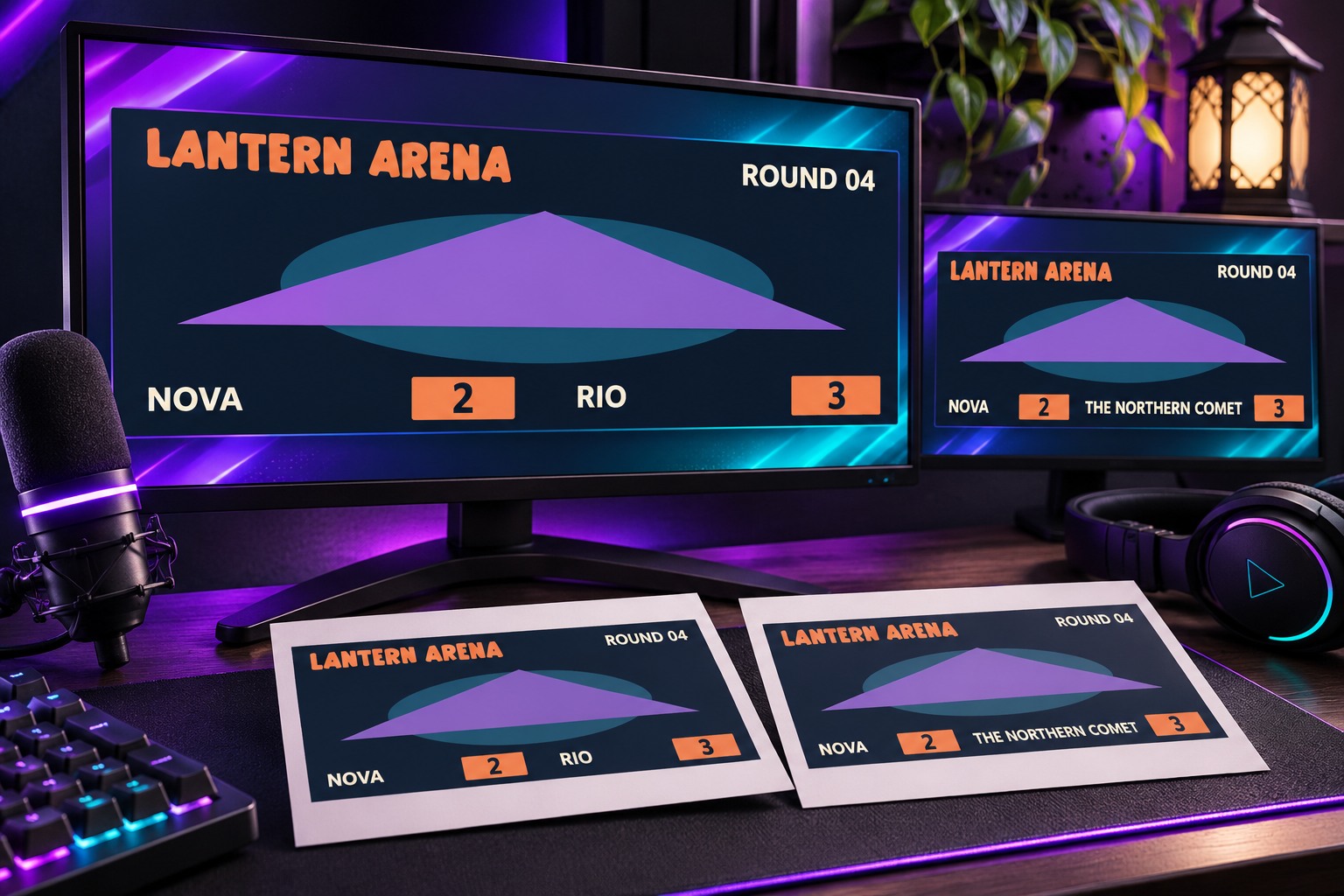
Separate broadcast identity from live data
The Lantern Arena heading uses Hulk Comic to create a lively tone. Player names and numeric values use a calmer style with a consistent alignment. Color, panel shapes, and the placement of information connect the two roles. The title does not need to appear in every corner for the overlay to feel like one system.
Limit secondary decoration near changing values. An animated-looking shape, a bright icon, and an expressive score can compete for the same attention. Keep a plain version nearby during development. If the information becomes easier to follow when an effect is removed, the effect needs a clearer purpose.
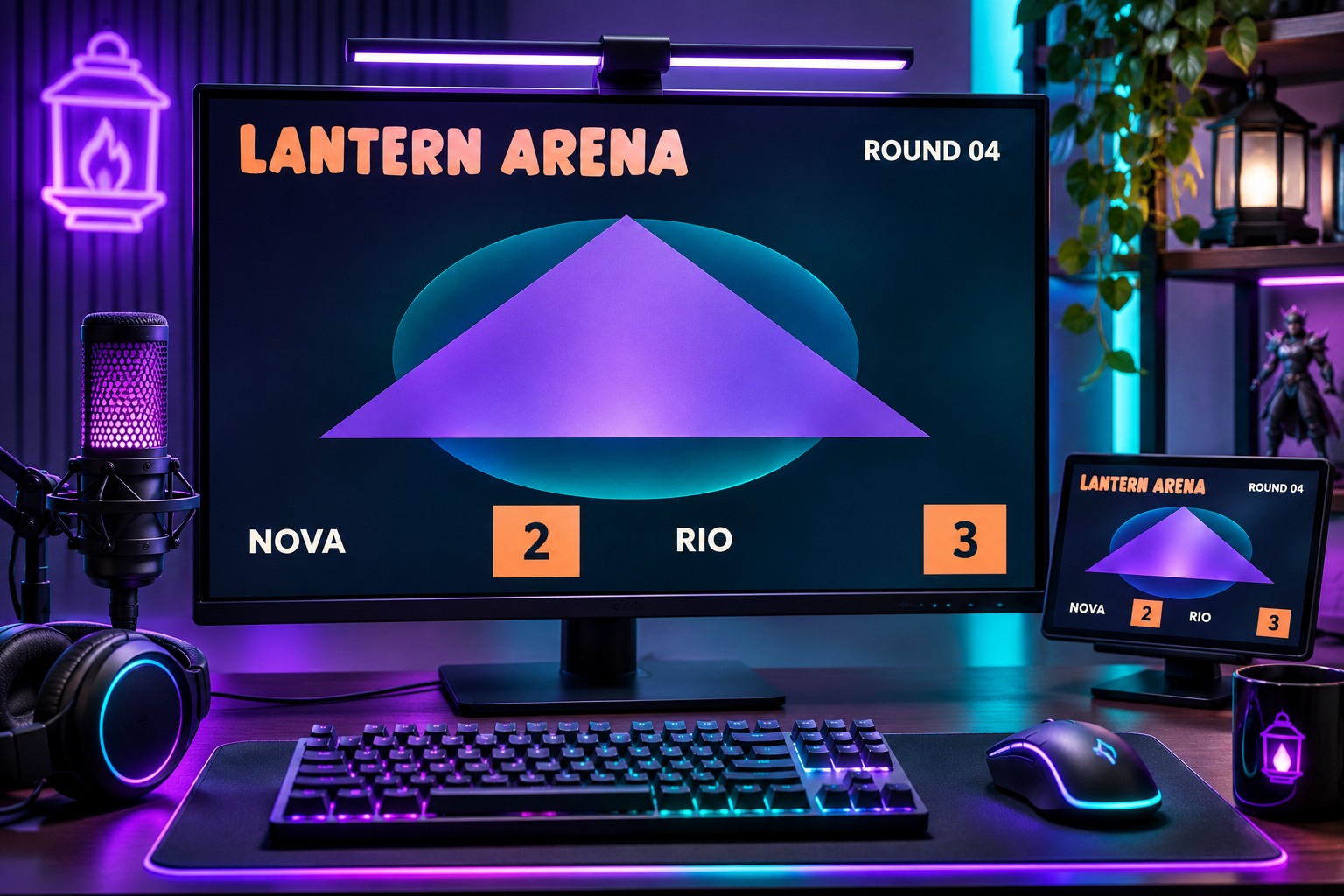
Compare a quiet scene with a demanding scene
Place the overlay over representative light, dark, and visually active scenes. A transparent panel that works over a calm background can lose its edges over a busy one. Inspect the name, the score, and any status line independently. Each can fail in a different part of the same scene.
The illustrated broadcast concepts use original game-style backgrounds. They demonstrate layout relationships without claiming performance in a game or streaming tool. Test the actual overlay in the intended broadcast pipeline, including motion and the compression used for delivery. An attractive still image is only an early proof.
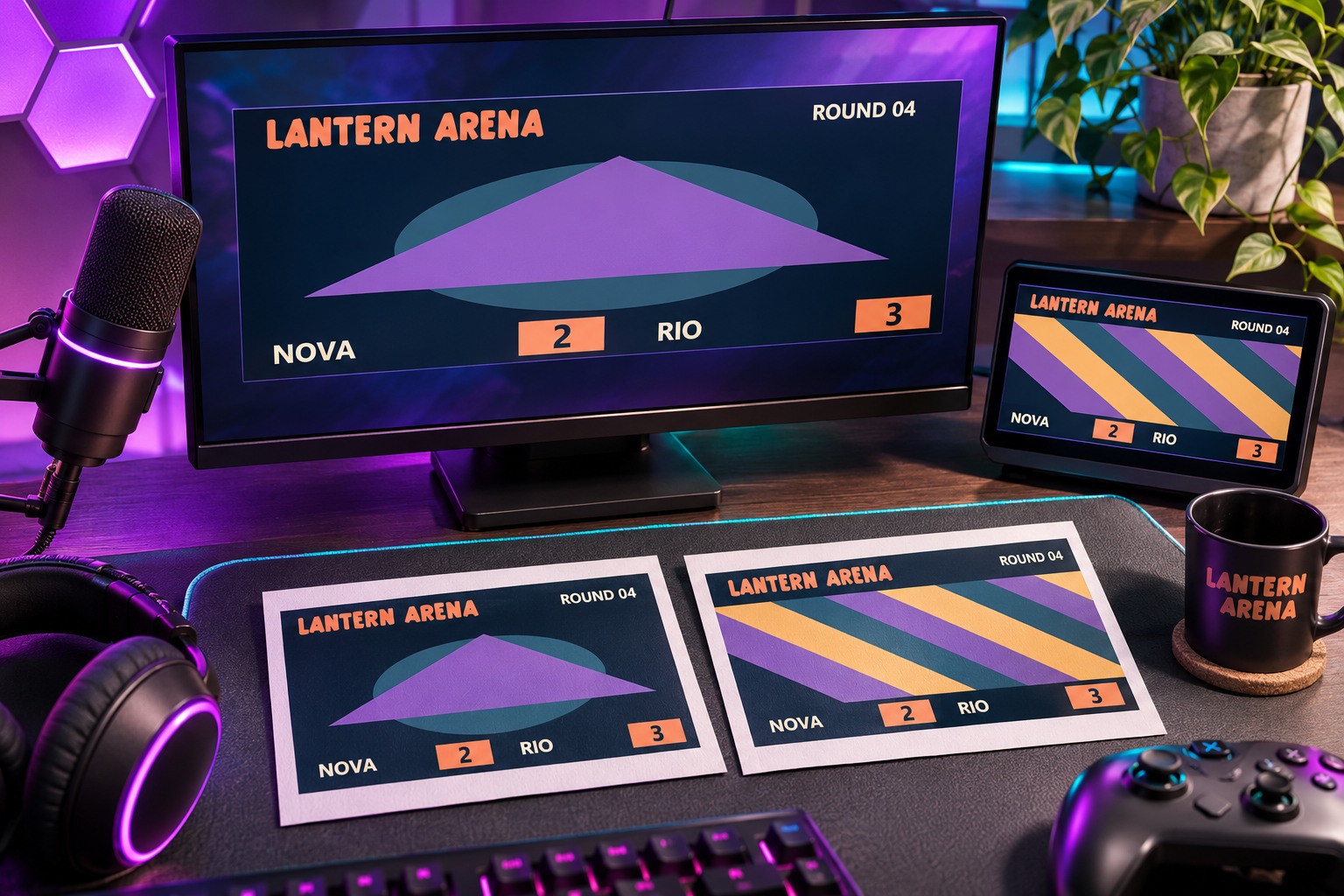
Review a smaller viewing size
Reduce the complete broadcast view until it resembles a compact audience view. Look at the overlay in context rather than enlarging the name field alone. A label can be legible in isolation while being hard to locate among several bright panels.
If the platform or broadcast plan requires multiple formats, create an arrangement for each. A vertical excerpt may need a different information area from a wide live view. Cropping the wide composition can remove a score, a round label, or one player's name. Keep essential context inside the version that will actually be published.
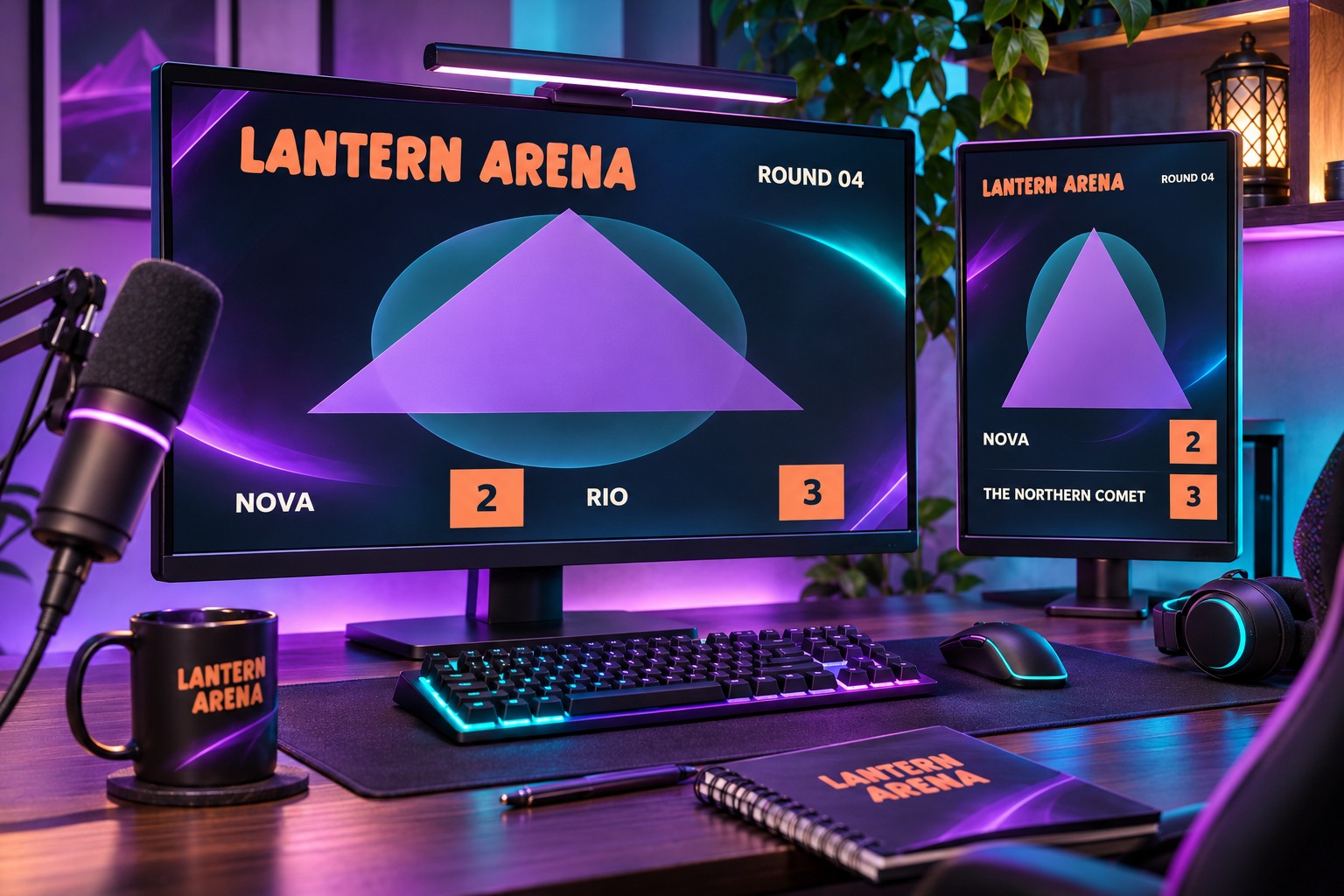
Rehearse the awkward update
Ask the operator to replace a short name with the longest sample, change a one-digit score to a two-digit score, and update the round label. Observe where the layout moves and where the editing process becomes ambiguous. Keep those observations tied to the actual file and tool rather than treating the article's static diagrams as a completed usability test.
| Field | Stress case | Review question |
|---|---|---|
| Player name | Longer spelling | Does the reserved area still work? |
| Score | More digits | Does alignment remain stable? |
| Match context | Longer round label | Is the context still separate? |
| Event identity | Compact view | Does it compete with live data? |
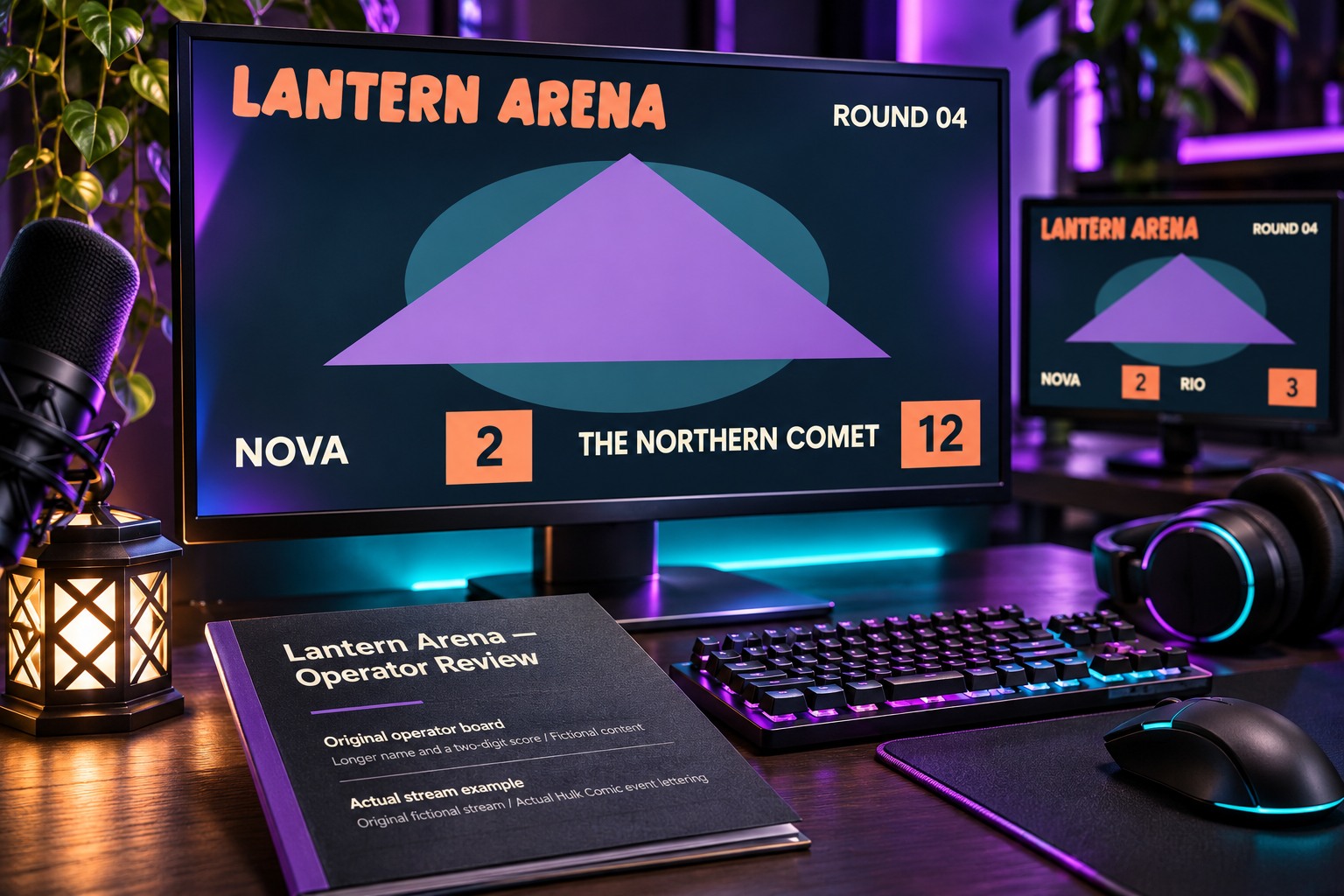
Keep a clean master, a practice copy, and the approved broadcast version. Explore Hulk Comic for the identity role and confirm the Lettersiro license for the intended uses. A useful overlay lets the show stay energetic while the audience can still identify who is playing and what is happening.