A motorsport result card has two jobs: celebrate the event and communicate the result accurately. A fast-looking title can establish the tone, but the finishing order, driver names, and times need a stable structure. If every line is treated as a racing logo, the information becomes harder to compare.
This original project uses Apex Saturday, a fictional event, with invented drivers and results. The event heading uses the downloaded Auto Race font. The data rows use a separate information style. The character proof uses the actual font, while the applied scenes are AI-generated concepts rather than official timing documents or race-management software screenshots.
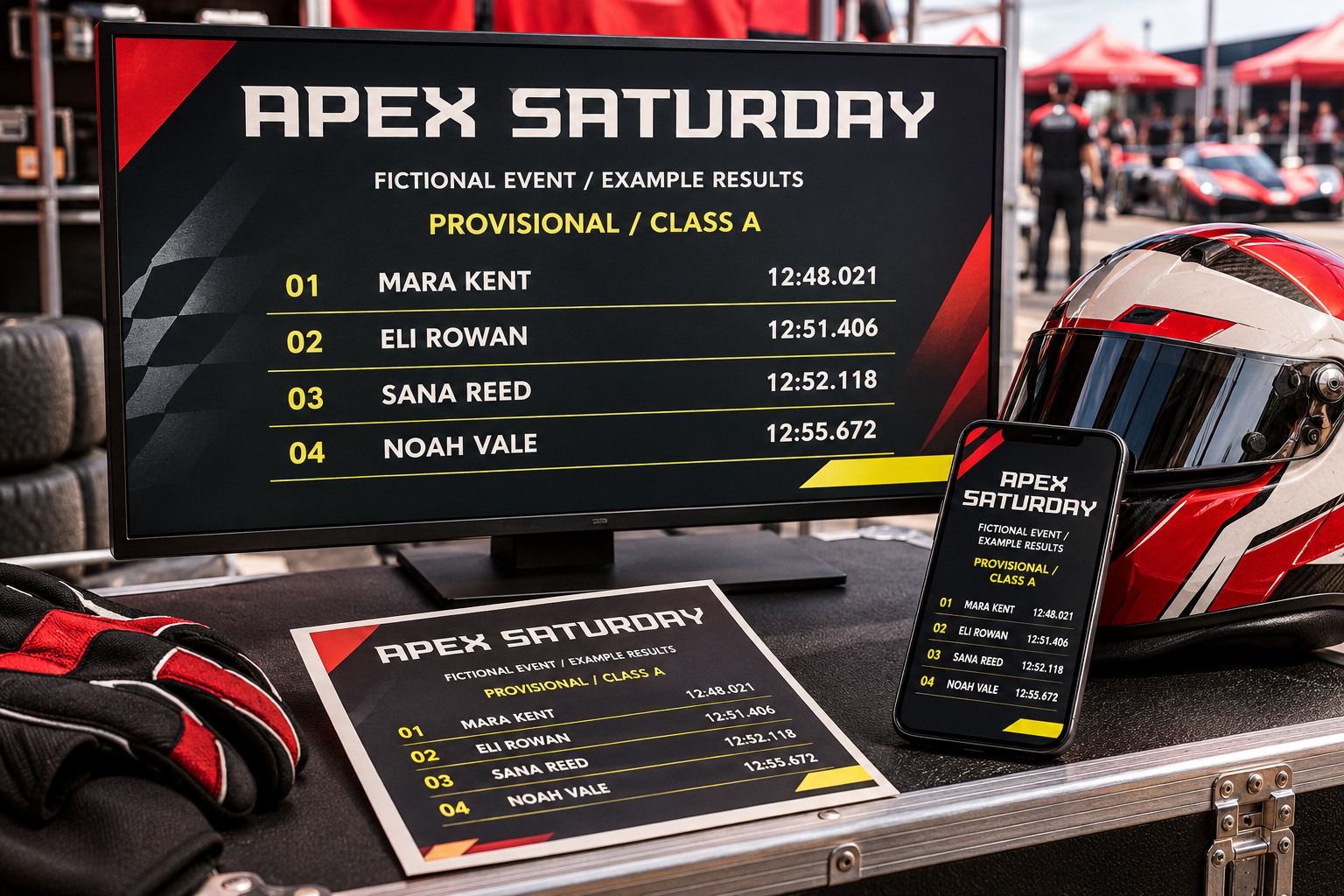
Inspect the download before choosing a style
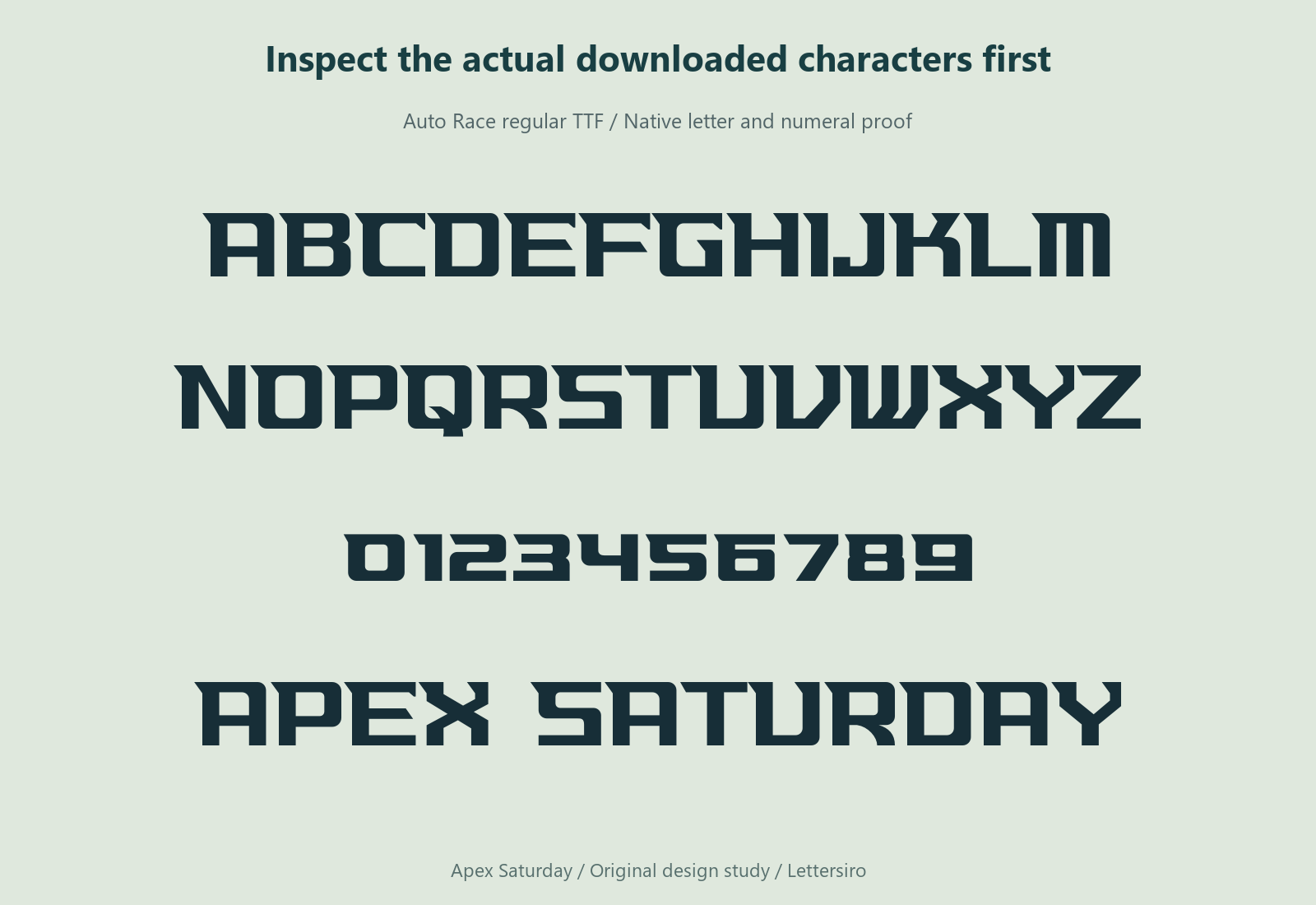
Start from the Auto Race resource page. At the time this project was prepared, its page identified it as a free commercial font resource. Review the current page and the supplied terms for your own use. Access to a download and the permission attached to a resource are separate details to confirm.
The inspected package contains several Auto Race variants, including regular, italic, outline, rounded, and extrude files, with format choices in the package. This study uses the regular TTF for a controlled starting point. Do not assume that installing one member automatically activates every related style in every application.
Lock the result content before styling it
Get the confirmed event name, class, round, finishing order, driver names, and the timing convention from the responsible organizer. An announcement may also need a provisional or final status. Keep that status conspicuous enough to be understood, rather than allowing decoration to imply an official result that has not been confirmed. If a later correction arrives, update the status and preserve a clear revision record with the source data.
Use invented data while building a practice template. Once real results arrive, replace the examples deliberately and have the organizer check them. Copying a visually plausible time from a previous event is not a safe shortcut. The most polished card still fails its purpose if one driver or position is wrong.
Give each column a predictable role
Keep position, driver, and time in consistent areas. A short name should not pull its time toward the center while a long name pushes it to the edge. Reserve enough room for the demanding name before choosing the final column proportions.
Separate units, labels, and values where the event's data convention requires it. Avoid changing timing precision merely to make rows look tidier. If the source uses a particular notation, preserve its meaning and ask about ambiguities before publication.
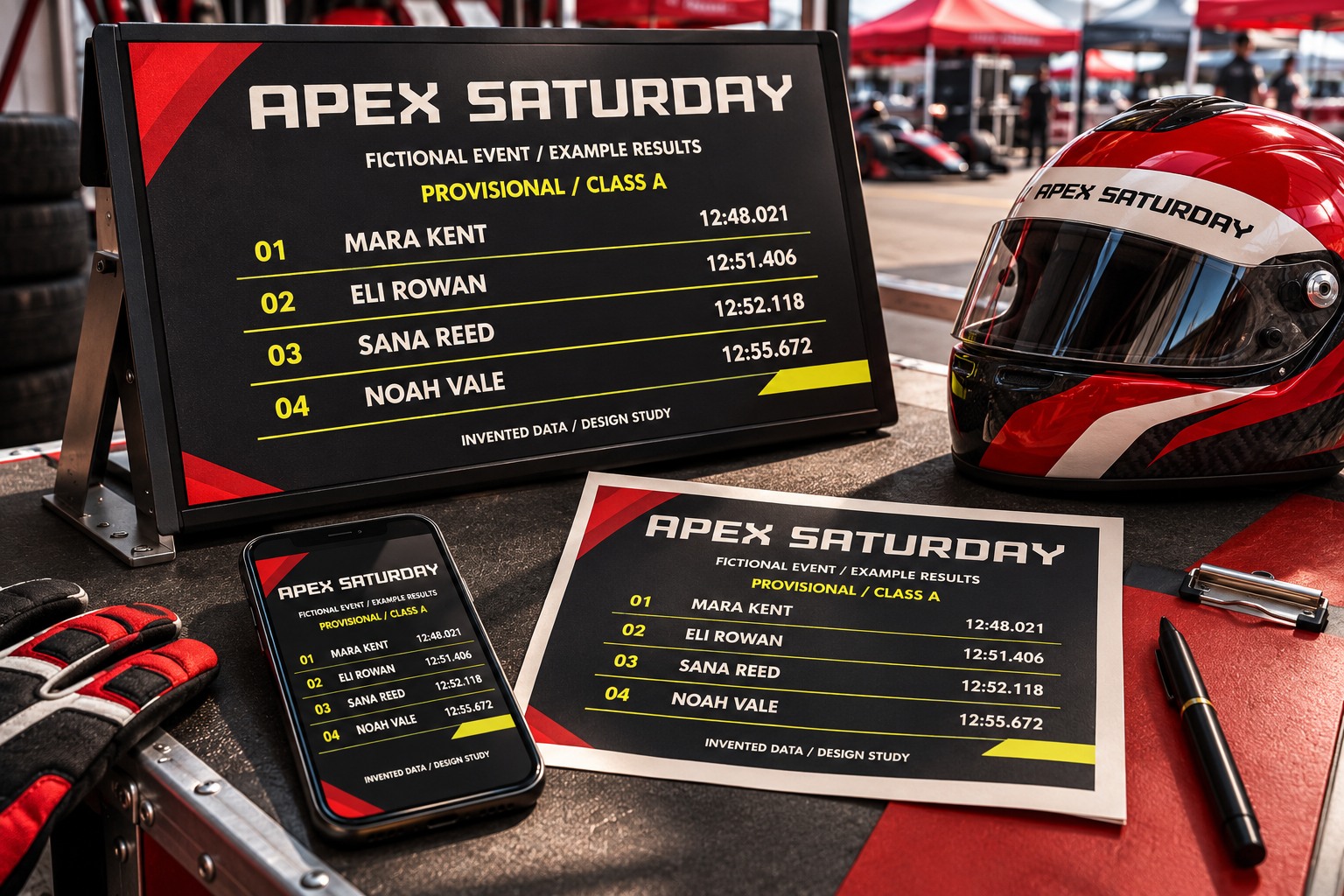
Use the display font where its character helps
Auto Race contributes a sharp, motorsport-oriented title voice. Keep that role focused. The information rows need their own comparison proof with names and numerals at the intended size. You can connect the two styles through color, spacing, and the shape of the header without making every data value expressive.
Avoid piling an outline, extrusion, slant, and shadow onto one short heading just because related styles are available. Compare a plain treatment with one deliberate effect. The event name should remain recognizable when the card is reduced or viewed among other announcements.
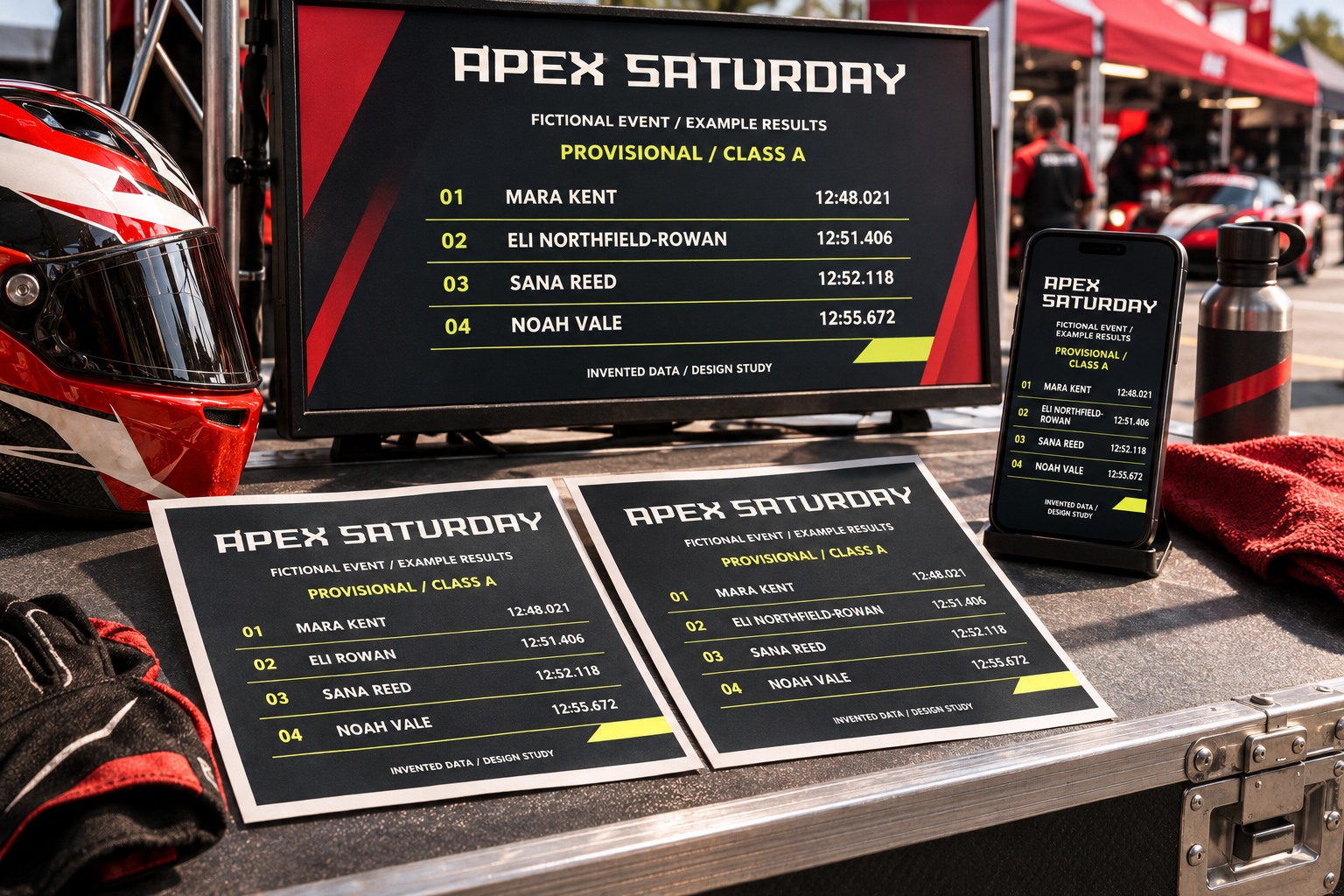
Adapt the card to the publication format
A square result post can show a compact table. A wide announcement may give the winning result more prominence and place the remaining rows beside it. A narrow story layout may need fewer rows per frame rather than a tiny full table. Preserve the order and clearly indicate when the content continues.
Do not crop away the event class or result status simply to enlarge the title. Those details explain what the numbers mean. Review the exported image at its actual display size and check that the last row receives as much care as the first.
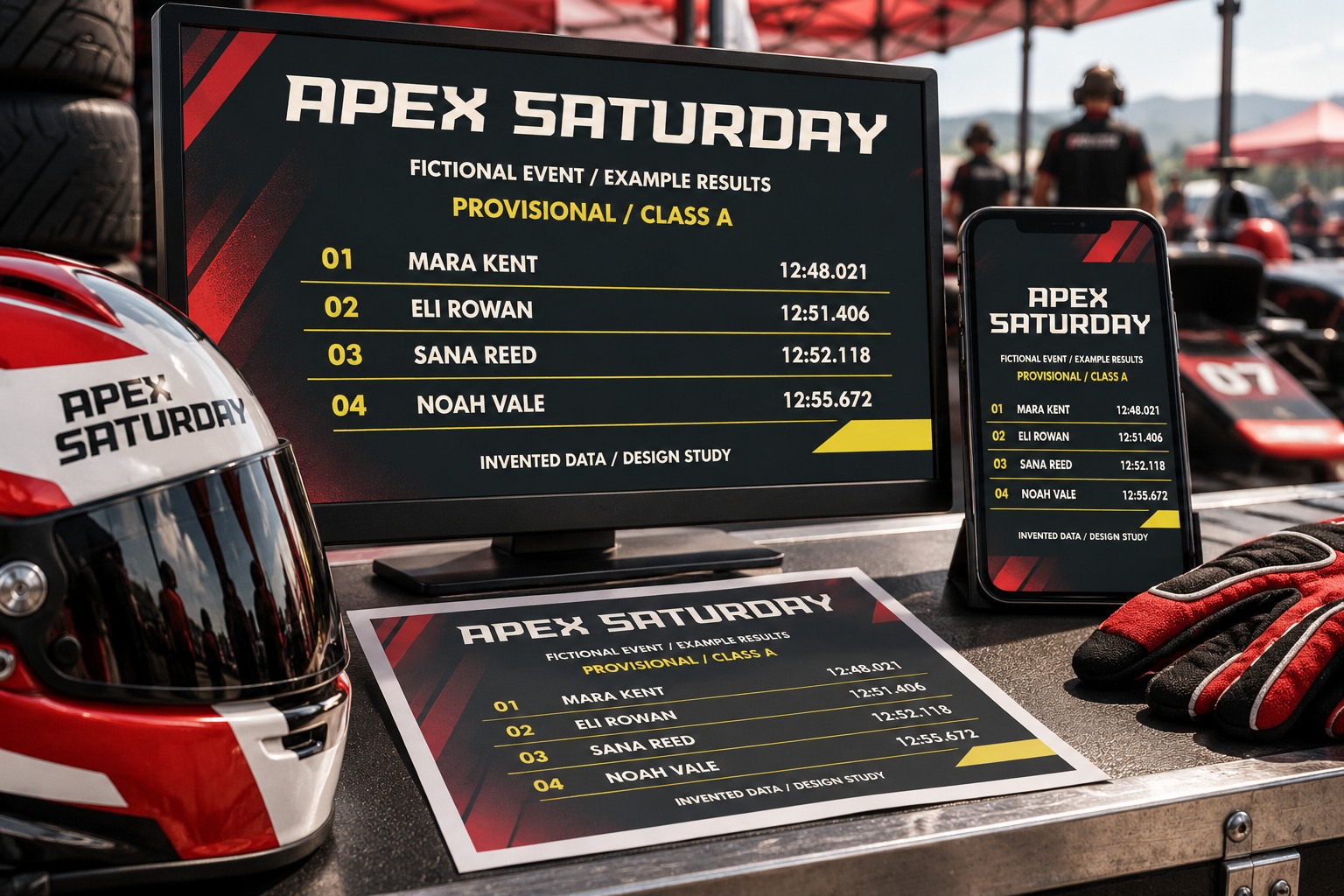
Make the final review about content as well as appearance
Read every name against the source. Check positions, punctuation, timing values, status, and class. Ask a second reviewer to follow the rows from left to right. Keep a revision label in the working file and a clear record of which export was approved.
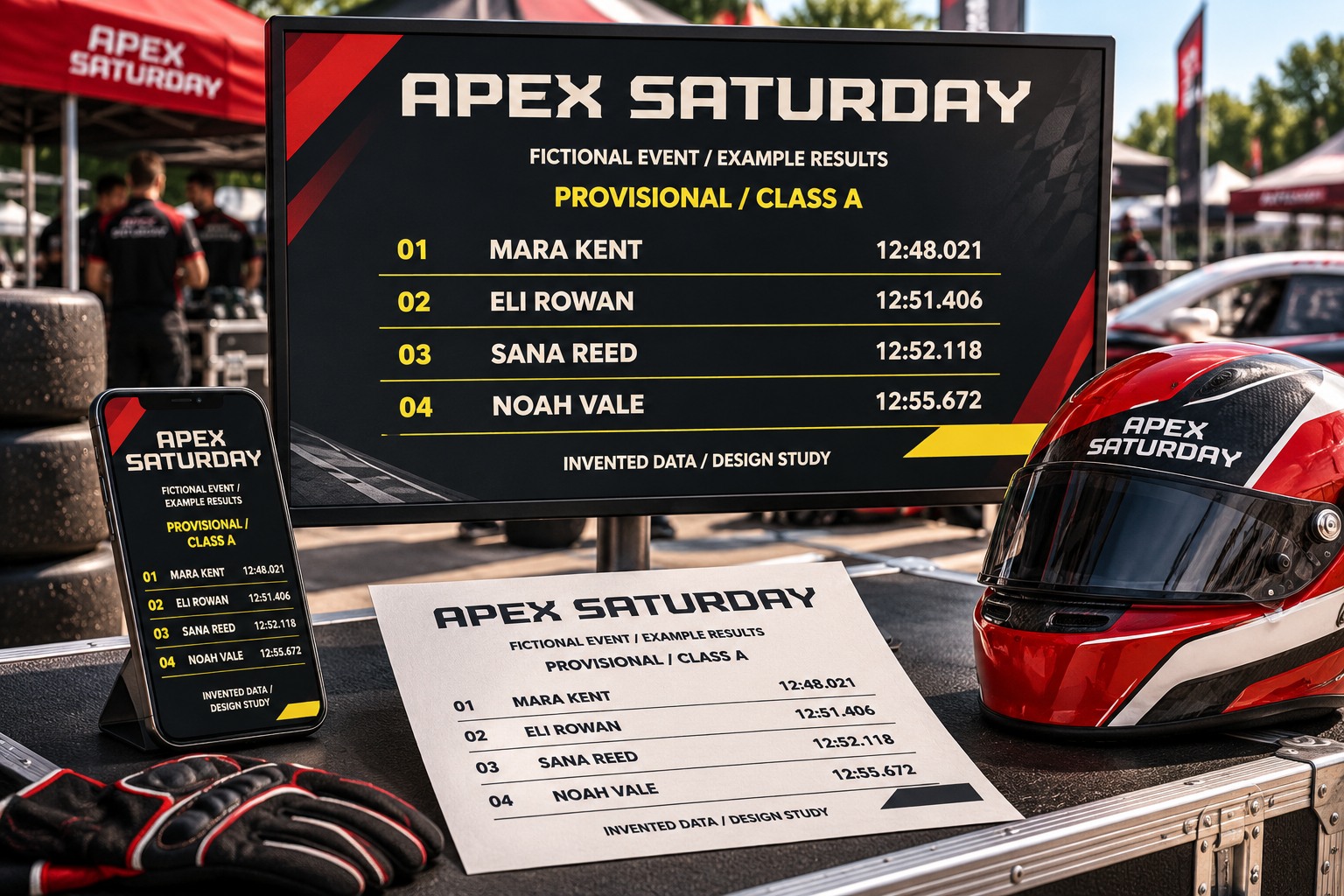
Save the editable master, source record, and reviewed export together. Return to the Auto Race download page for current details, explore other Lettersiro freebies, and use the Logo Tester when comparing a different event name. A successful result card lets the title create energy while the data remains orderly and trustworthy.