
A brand guide can explain the ordinary case and still leave the team uncertain when the identity reaches an unusual surface. A narrow label, a round avatar, a one-color plate, or a tiny header may not accommodate the standard arrangement. Without a recorded exception, each designer improvises a different repair.
Create an exception sheet that explains the constraint, the approved response, and the limits of that response. This article uses Tern & Co, a fictional identity with actual Meaning Elegant lettering. The applications are original layout studies, not manufactured objects or approved assets for a real company.

Define the normal case first
Keep an approved ordinary arrangement beside the exceptions. Show the name, proportions, surrounding space, and supporting descriptor when one belongs to the identity. The team needs a clear reference before it can understand what an exception changes.
An exception should solve a specific constraint. It should not become an unexplained second identity that appears whenever a designer prefers a different look. Record why the standard arrangement does not work in the particular application and which relationship needs to be preserved.
Name the constraint in plain language
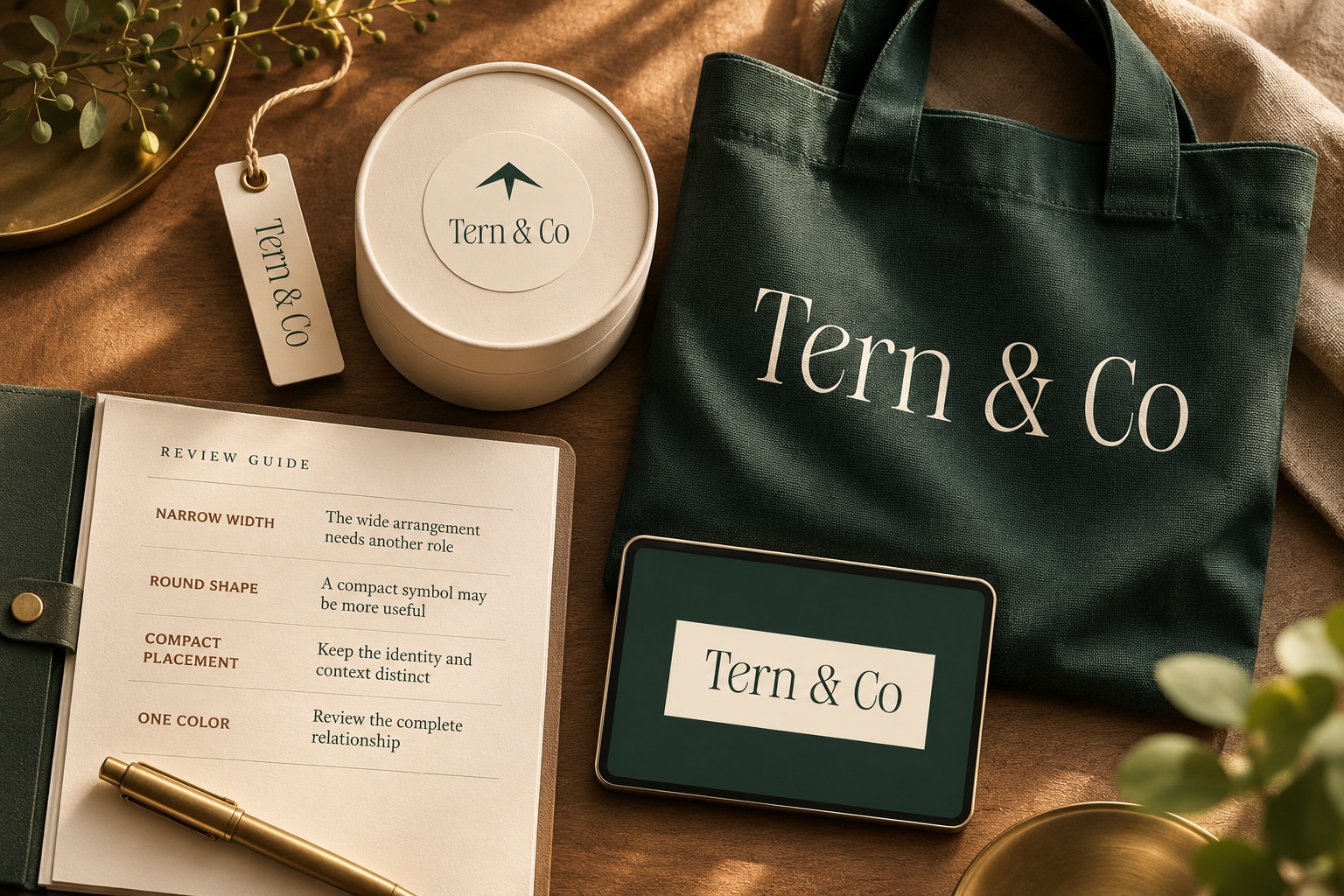
Describe the actual problem: the available area is narrow, the placement is circular, the process uses one color, or the supporting line becomes too small. Avoid a broad label such as special use without an explanation. Someone encountering the sheet later should understand when it applies.
Keep the available dimensions and relevant production information with the job record where needed. The illustrative shapes in this article explain the decision process. They do not establish a minimum manufacturing size, a material tolerance, or a universal placement rule.
Approve an alternate arrangement rather than a distorted copy
Try a deliberate stacked lockup, a simplified relationship between name and descriptor, or another approved identity asset when the standard wide version does not fit. Keep the letterforms' proportions intact. Stretching a wordmark into every available shape produces inconsistent lettering rather than a useful system.
Review the alternate next to the normal case. It should still communicate the same identity while adapting the arrangement. If the response removes or replaces part of the name, that is a more substantial identity decision and should be reviewed as such.
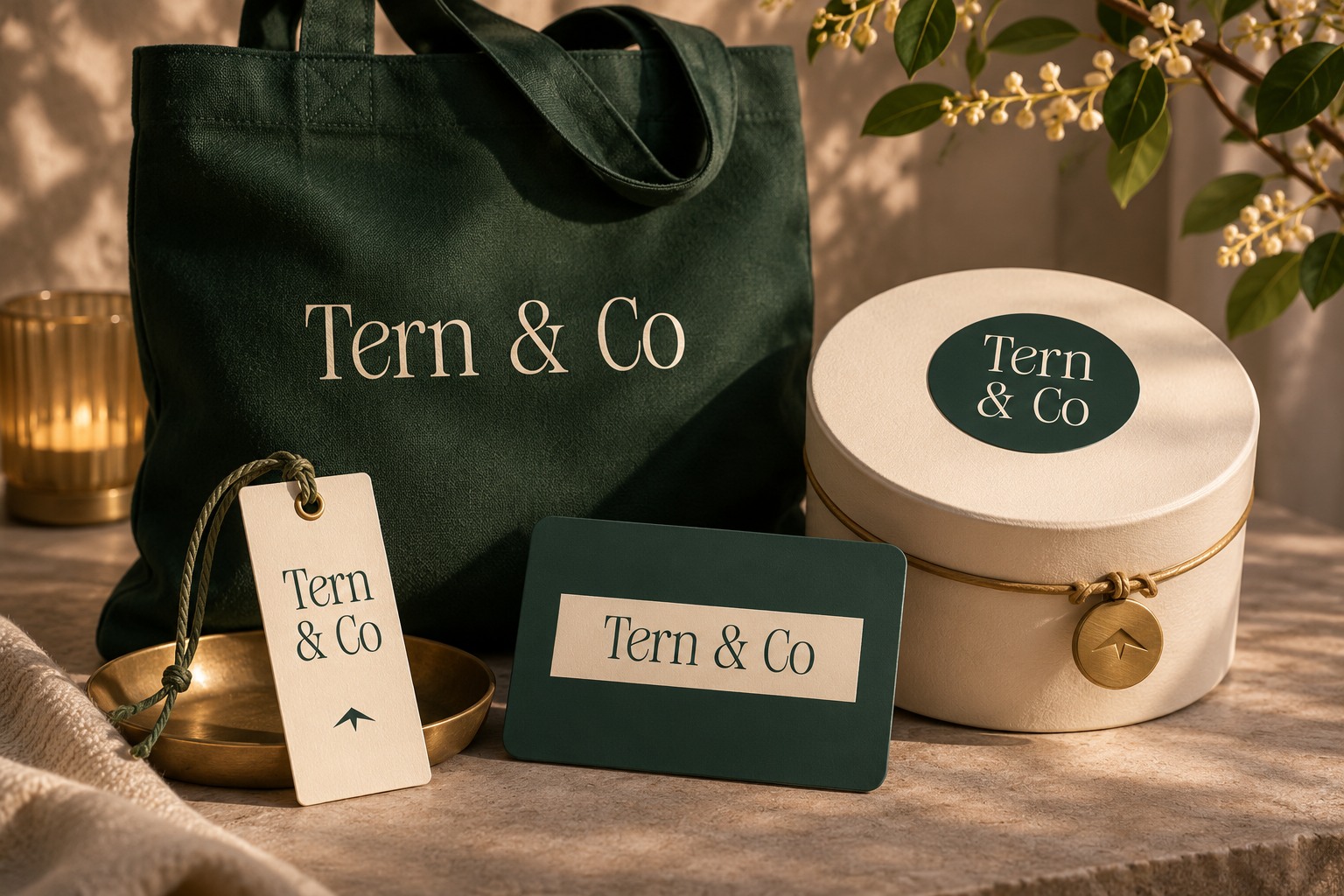
For a round avatar, a separate approved symbol may be more suitable than forcing the full name into a tiny circle. Develop and review that symbol deliberately. A casual crop of the wordmark is not automatically a recognizable compact identity.
Treat one-color use as a complete composition
Remove the palette and inspect the name, descriptor, and surrounding shapes together. Keep enough separation that the information does not depend entirely on a color difference. A one-color asset should be a reviewed version of the identity, not an accidental grayscale conversion that loses important relationships.
If the application involves printing, engraving, stitching, or another physical process, use the supplier's actual requirements and an appropriate proof. A concept illustration can show a proposed arrangement, but it cannot establish how fine strokes will behave on a material.
Show the demanding case with surrounding content
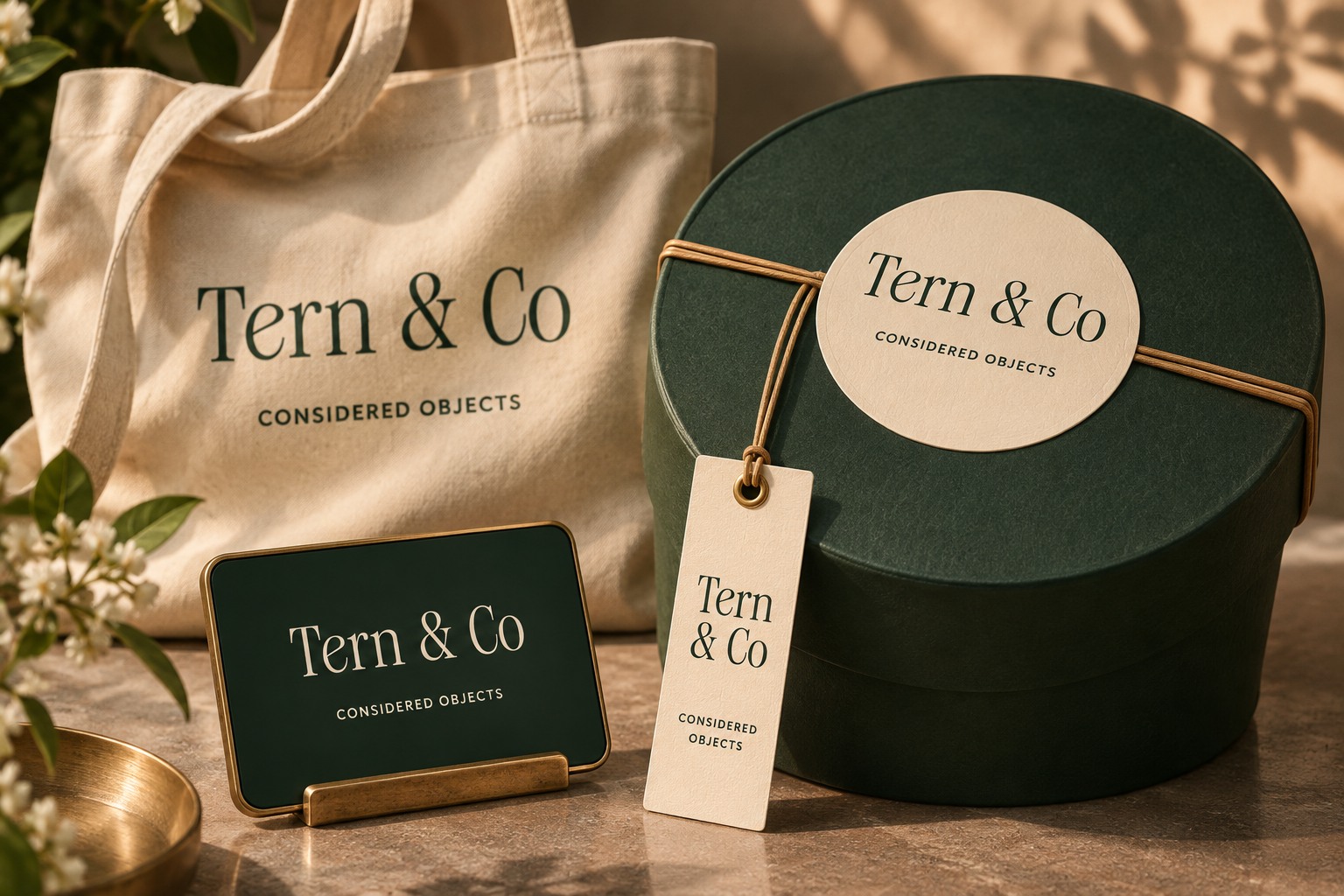
Place the exception into a representative layout. A narrow identity may fit its label while leaving no room for the product name beneath it. A compact header can look clear in isolation but compete with nearby navigation or controls. Inspect the full relationship.
Keep a practical example on the exception sheet. Show what changed and what remains stable. If the descriptor is omitted in a specific compact version, say when that is allowed and where the full identity is still provided. Do not leave that omission to an editor's guess.
Give each exception a scope and a review record
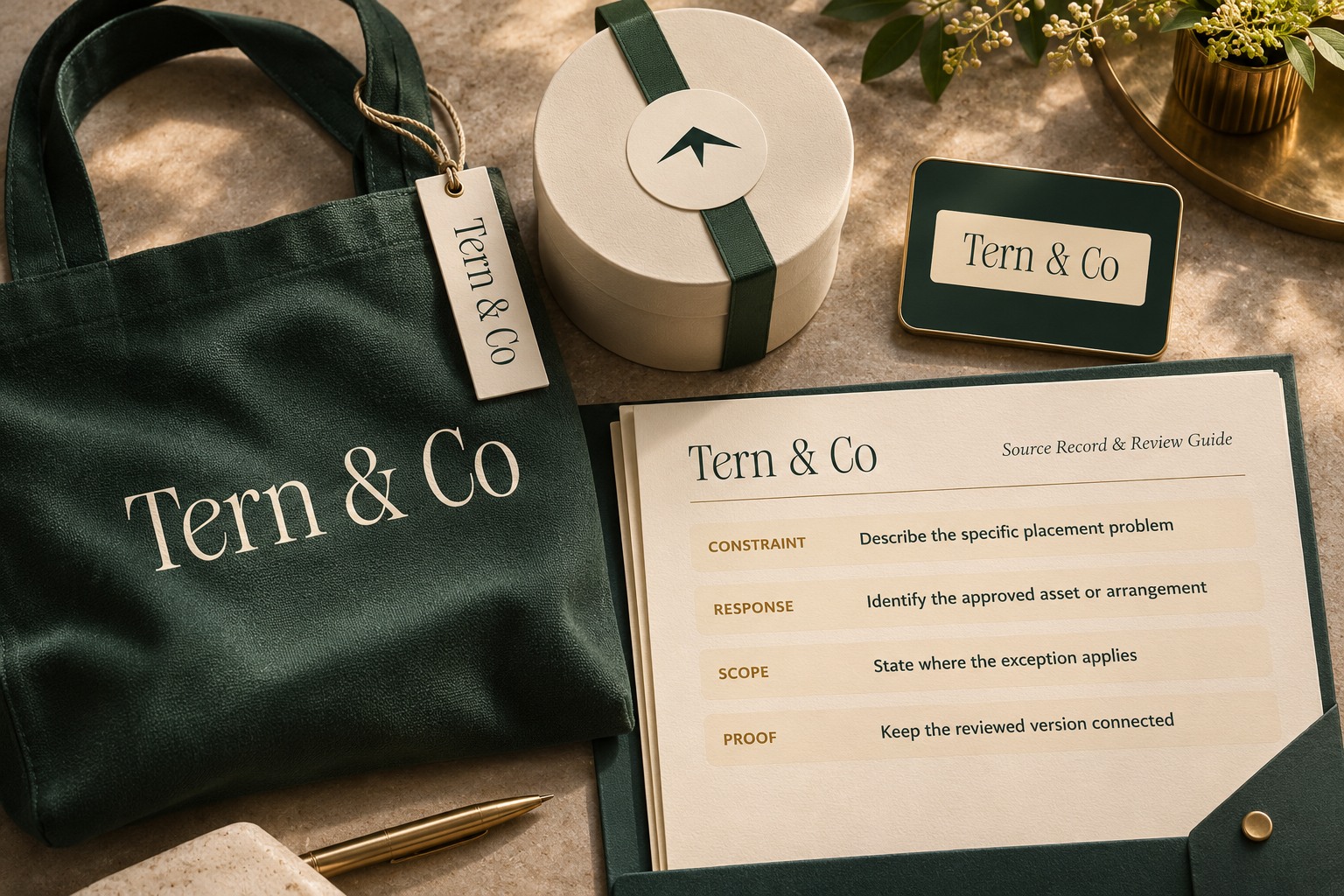
Record the intended application, approved asset, relevant constraints, and proof version. Add the responsible reviewer or team role so a new use can be assessed without inventing another local rule. Keep the exception sheet connected to the actual asset library.
| Record | Why it belongs on the sheet |
|---|---|
| Constraint | Explains why the normal arrangement changes |
| Approved response | Identifies the asset or arrangement to use |
| Scope | States which application the exception covers |
| Limits | Prevents the exception from becoming a default |
| Proof version | Connects the decision to reviewed artwork |
Review the sheet when a new application reveals a repeated problem. A recurring exception may indicate that the core system needs a broader update. A rare production case may remain a narrowly scoped asset. Keeping that distinction visible helps the identity grow without turning into a collection of unexplained variations.
Explore Meaning Elegant for a contrasting display voice and confirm the Lettersiro license for the intended use. The exception sheet is useful when the next designer can see the reason for a change, choose the appropriate asset, and preserve the identity's deliberate relationships in a difficult space.