
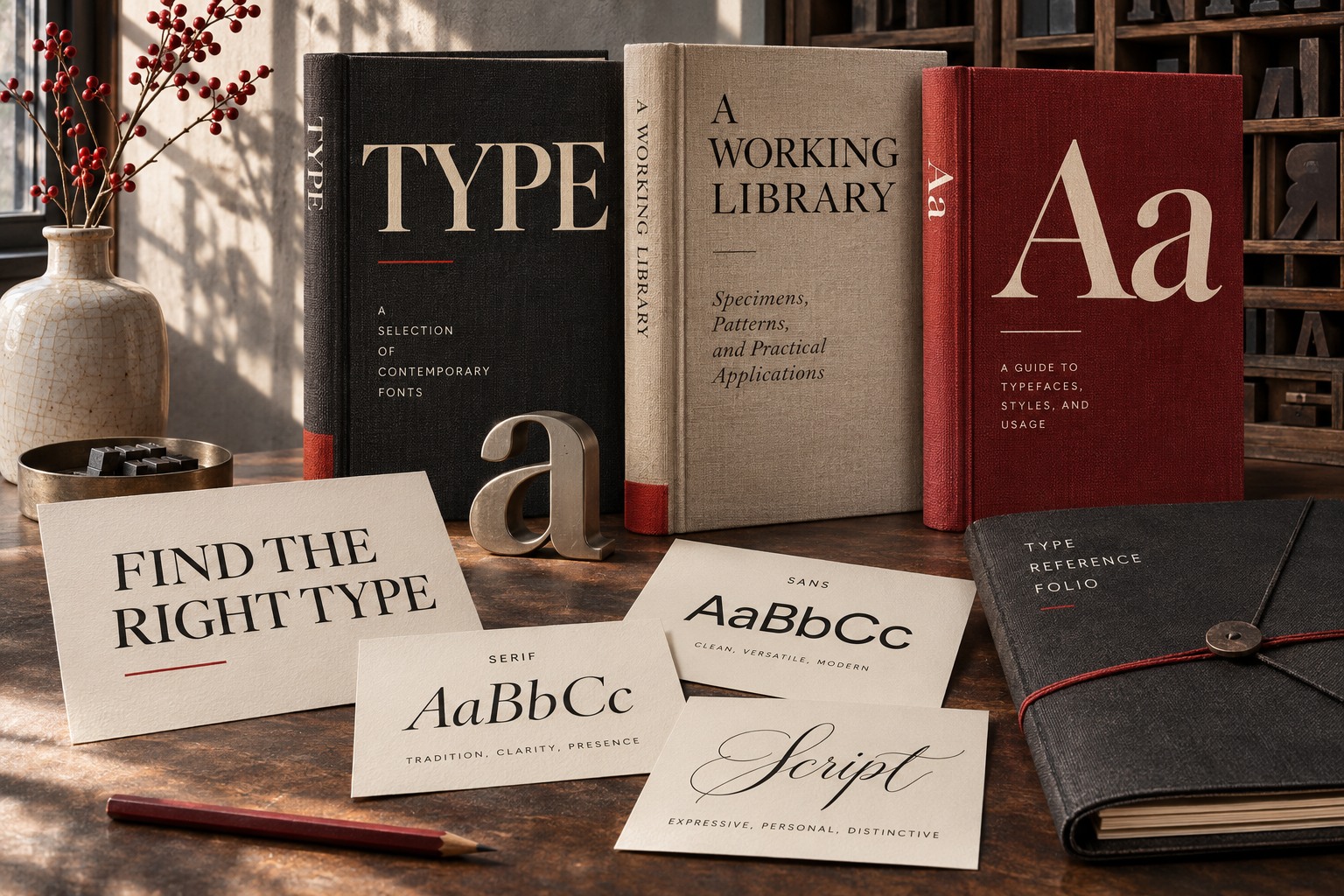
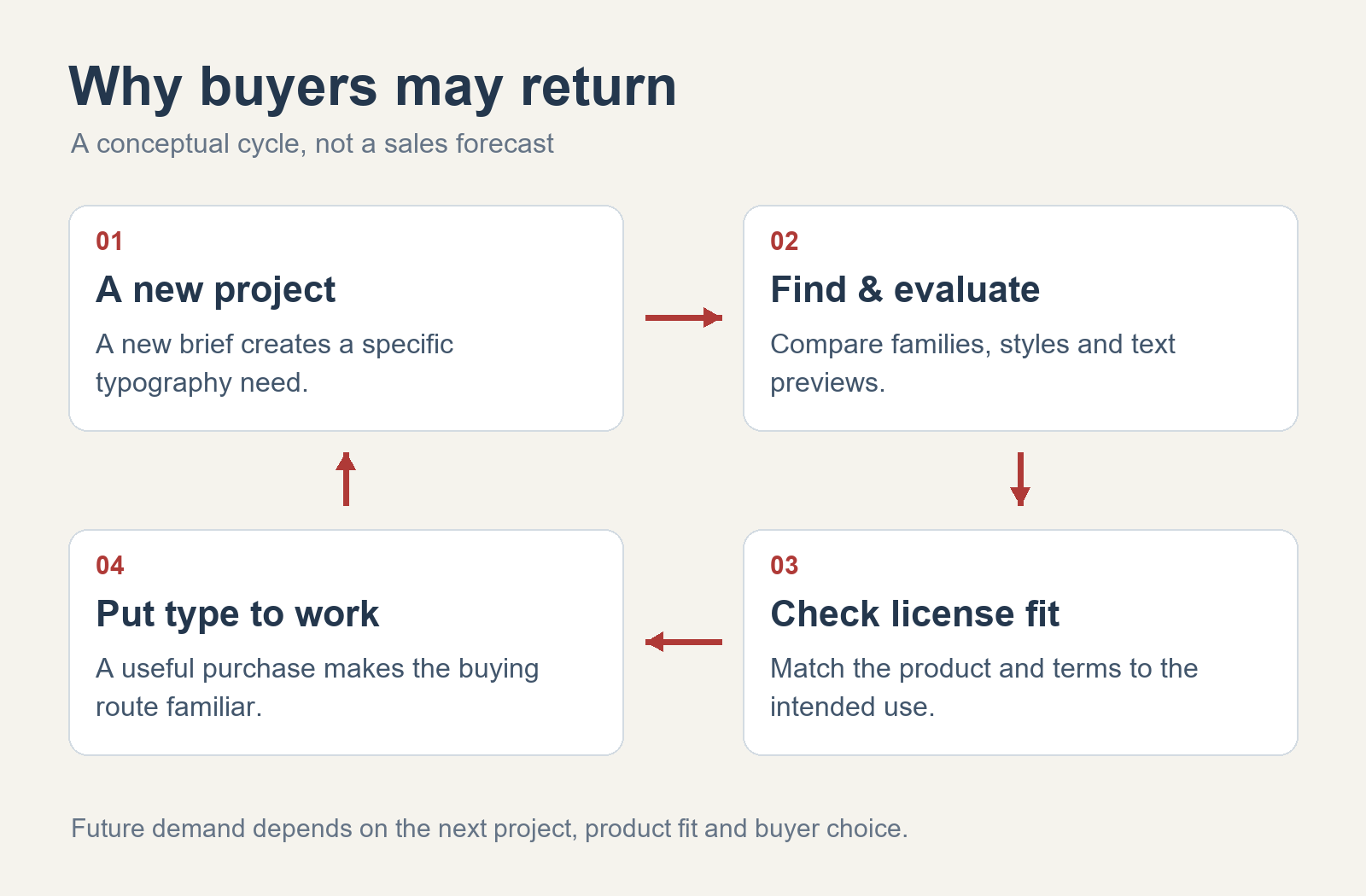
MyFonts has something a launch-day discount cannot create overnight: a familiar place in the way people buy type. A designer with a client deadline may arrive looking for a particular family, compare a few alternatives, check the available license, and get back to work. That practical buying routine helps explain the marketplace’s staying power.
For a foundry that receives regular orders there, MyFonts font sales can feel more dependable than sales driven mainly by a brief promotion. The useful question is what supports that demand—and how much of that strength reaches an individual seller.
Is MyFonts the biggest font marketplace by sales?
MyFonts is clearly a major player. Its official company overview describes a marketplace founded in 1999, owned by Monotype, with more than 400,000 fonts from over 5,000 foundries and independent designers.
However, those figures describe its catalog and contributors, not its revenue. The public sources reviewed for this article do not provide an independently audited comparison establishing that MyFonts sells more fonts or generates more font revenue than every competing marketplace. Website traffic estimates and individual foundry experiences cannot establish that ranking on their own.
The stronger conclusion is that MyFonts has several advantages that can support durable commercial demand. The explanations below are an analysis of those advantages, rather than a claim that its monthly sales—or anyone’s royalties—always rise.
1. Buyers often arrive with a real project to finish
There is a difference between browsing beautiful lettering and needing a font for a project that starts tomorrow. A buyer may need an approved corporate family, a particular language’s characters, a set of weights, or an appropriate license for the intended application.
A specialist font marketplace puts these questions near the purchase decision. That can make the visit commercially valuable even when the buyer is not searching for the cheapest available download.
Consider an agency updating a brand presentation. If the brief specifies a particular type family, an unrelated bundle of hundreds of fonts does not solve the same problem. The buyer’s priority may be finding the correct product and understanding what is included.
This is a plausible source of resilience: a live project can create demand independently of whether a font happens to be fashionable on social media that week. It is not proof of MyFonts’ conversion rate; it explains why specialist buying intent matters.
2. Established typefaces can keep selling for years
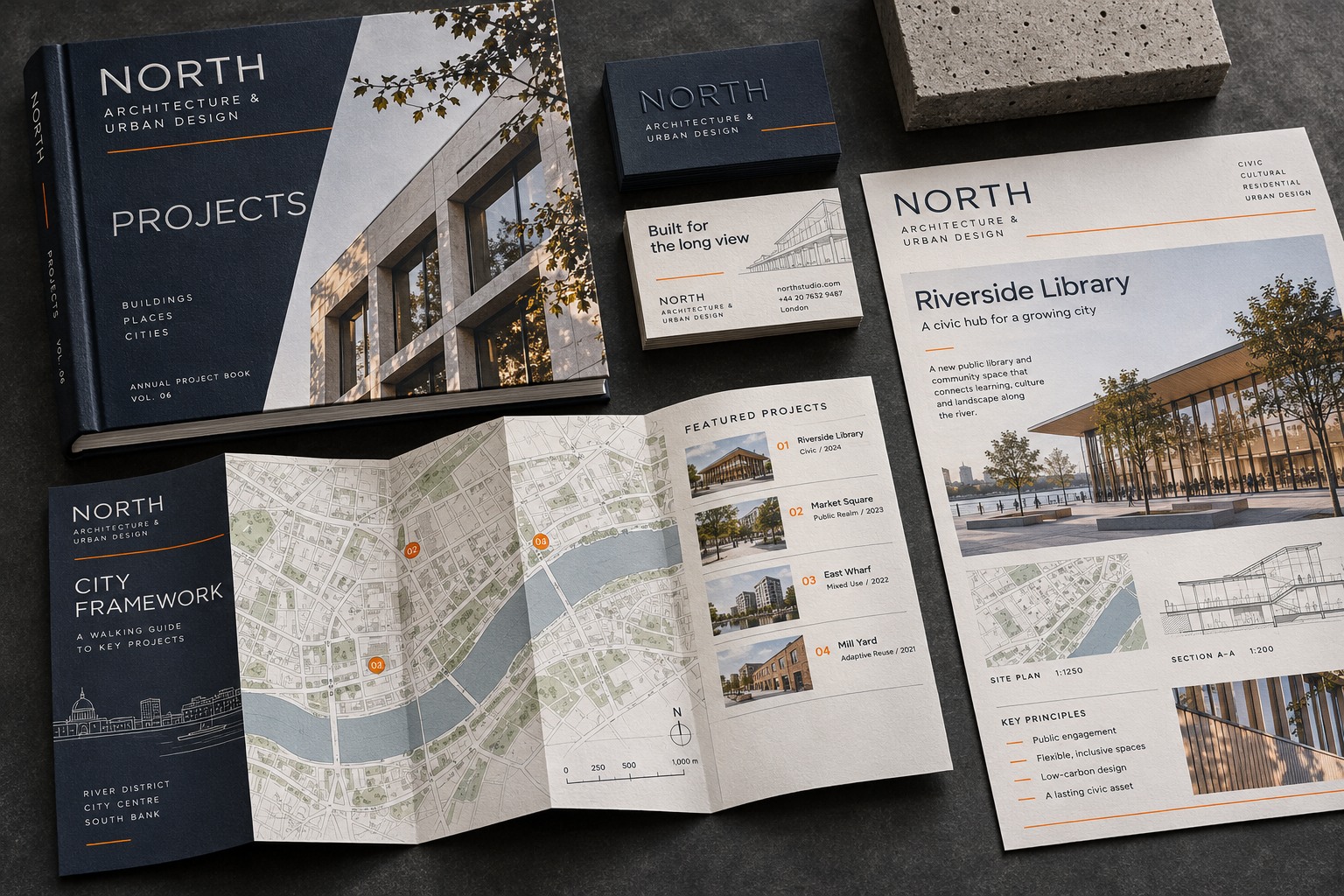
A font is unusual as a digital product. Being several years old does not automatically make it obsolete. If its shapes, spacing, character coverage, and style range continue to suit a task, it can remain useful across many projects.
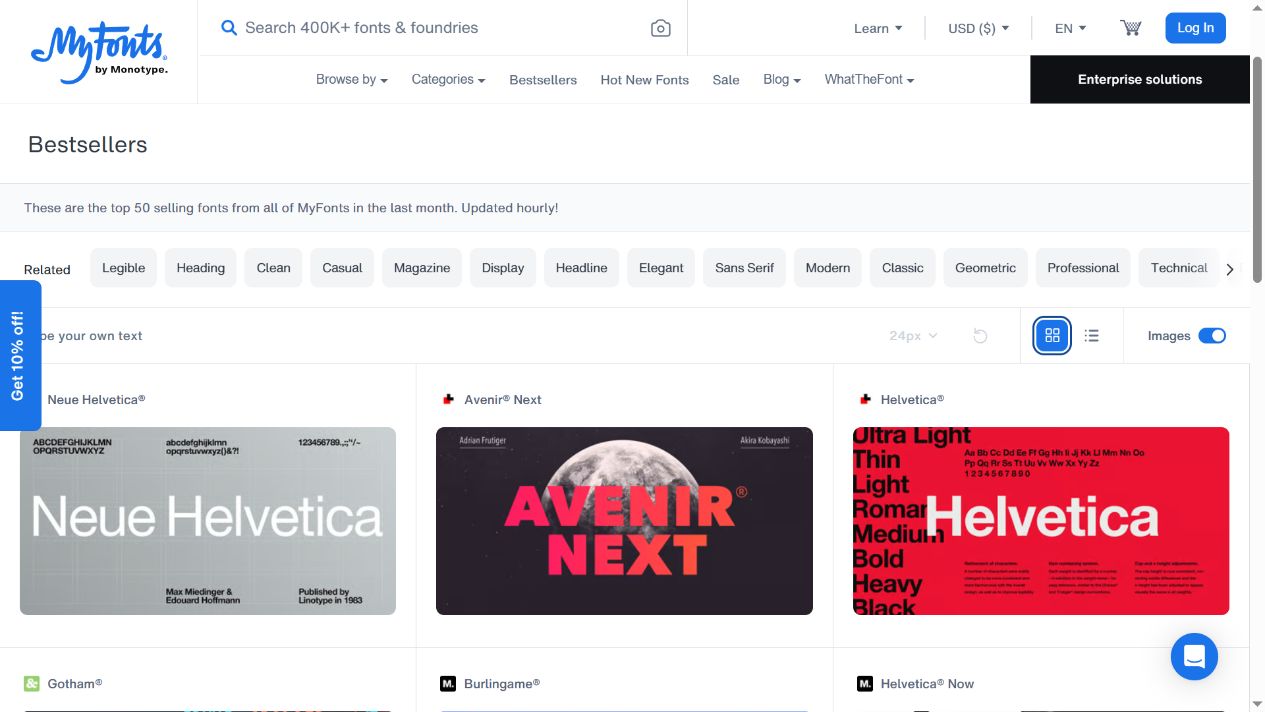
Monotype’s Best Sellers documentation provides a relevant signal. It says the list ranks 50 families by revenue earned during the previous month, allows both old and new releases, and often features established designs with consistent sales. That supports the idea of lasting demand for certain families; it does not establish stable sales across the whole site.
A typeface adopted into a brand system may remain relevant when new teams or suppliers need their own authorized access. Different projects may also require uses beyond an existing license’s scope. MyFonts’ licensing FAQ explains several use categories. Whether another purchase is needed depends on the actual agreement—continued use does not automatically mean buying the same license again.
The result is a different kind of commercial life cycle from a one-week trend. A strong font can become part of working infrastructure. Fonts do not necessarily retire because the calendar changed.
3. Discovery tools create more routes to the catalog
Some people know the exact font they want. Others only have an image, a mood, or a rough brief. Serving those different starting points makes a large catalog easier to use.
WhatTheFont lets people identify possible typefaces from an image. It connects a visual question—“What font is this?”—with products that can be examined further. A suggested match still needs checking; identification is not a guarantee of an exact result.
There is also natural-language discovery. In its February 2026 AI Search announcement, Monotype described finding fonts through creative intent, such as mood and use case, and announced availability on MyFonts in the US and UK at launch. Availability can develop over time.
The business implication is straightforward: a buyer who cannot name a classification may still be able to describe a project. Making that route easier could help useful fonts get considered. That is a reasoned possibility, not a measured claim about additional sales generated by these tools.
4. A broad catalog can make the next project easier
Different jobs need different type. A publication may need a substantial text family; a restaurant identity may need expressive display lettering; a product interface may need compact, readable styles.
When a familiar marketplace covers several of those needs, a designer has a reason to return. The benefit is partly selection and partly reduced effort: learning a new seller’s site, checking its purchasing process, and locating the right product all take time.
There is a possible reinforcing effect here. More useful choices can attract more project searches; more buyer attention can encourage more foundries to participate. Yet catalog size also creates competition. A marketplace can become more useful to buyers while making visibility harder for any one family.
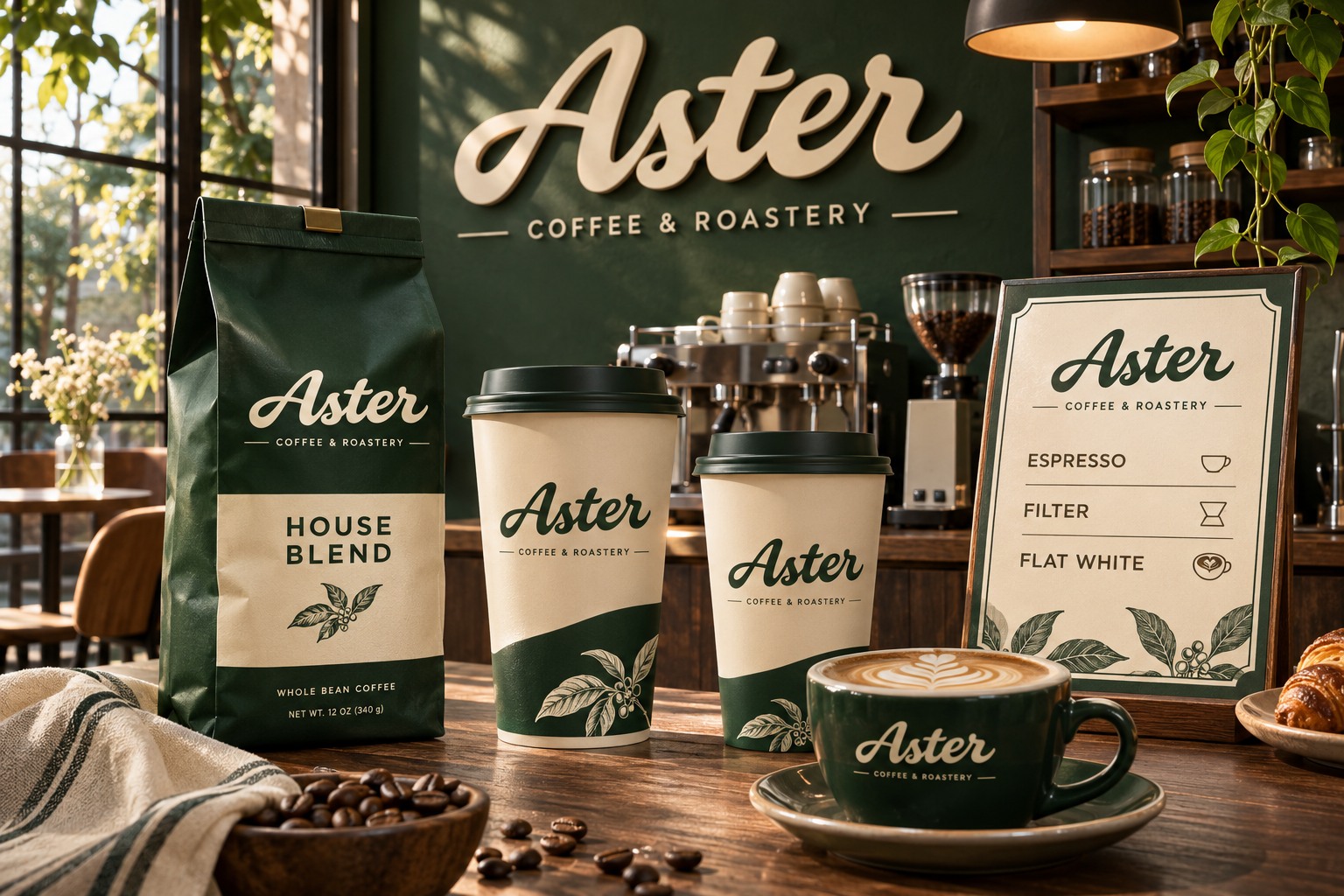
For a seller, the lesson is to make the product easy to understand. Show what the font does in a finished setting, demonstrate its useful features, and explain which design problems it suits. A page full of alphabet samples alone leaves more of that work to the customer.
5. Consolidation strengthened its role as a destination
Part of MyFonts’ current position comes from the organization of Monotype’s own storefronts. In its direct-commerce platform announcement, Monotype said it would discontinue the Linotype.com, FontShop.com, and Fonts.com sales platforms and transfer their business and customers to MyFonts.
That matters when discussing the marketplace’s scale. A larger destination can reflect a combination of product appeal, accumulated buyer habits, and business transferred from other sites.
The practical inference is that bringing familiar catalogs and purchasing routes together can concentrate attention. It would be misleading to describe all of that concentration as brand-new demand created from nothing.
It also means a fair comparison needs care. Comparing MyFonts today with a former storefront that no longer operates in the same way does not measure independent competitors on equal terms.
6. Visibility has several layers, not just one launch window
MyFonts has distinct discovery areas for established sellers and recent releases. Its Hot New Fonts guidance says that page ranks eligible new families released within the past 50 days by revenue. Its Special Offers section provides another route to discounted products.
Those surfaces serve different needs: finding something new, checking what is selling, or considering a current offer. They give customers several reasons to explore the catalog.
But a launch promotion and durable demand are different achievements. A discount can encourage an initial purchase without establishing a reliable long-term audience. The more interesting test comes after the introductory attention has faded: does the family still answer a useful design need?
Presentation helps that evaluation. Monotype’s foundry onboarding guidance asks for at least five promotional images for a new submission. Images should earn that space by demonstrating applications and features, rather than repeating the same specimen with a different background.
What does “stable font sales” actually mean?
Stability needs a time period and a definition. A seller might mean regular monthly orders, royalties that fluctuate within a tolerable range, or revenue that does not depend heavily on one promotional event. Those are related ideas, but they are not interchangeable.
At marketplace level, demand can be spread across many products. At foundry level, one family or one unusually large order might account for much of the result. The marketplace can appear active while a particular seller experiences a quiet month.
| Signal | What it can tell you | What it cannot establish alone |
|---|---|---|
| A large catalog | Buyers have many products to consider. | Which marketplace earns the most revenue. |
| A bestseller position | A family performs strongly within that ranking’s rules. | Its unit sales, the seller’s net income, or results elsewhere. |
| High website traffic | Many visits reach the site. | How many visits become paid font licenses. |
| Regular seller royalties | That seller has a recurring income pattern over the measured period. | That every foundry experiences the same stability. |
For a meaningful personal comparison, examine the same months across channels, distinguish promotional from regular-price orders, and separate gross sales from what the foundry actually receives. One spectacular week can be encouraging without being a sustainable baseline.
Marketplace revenue is not the same as foundry income
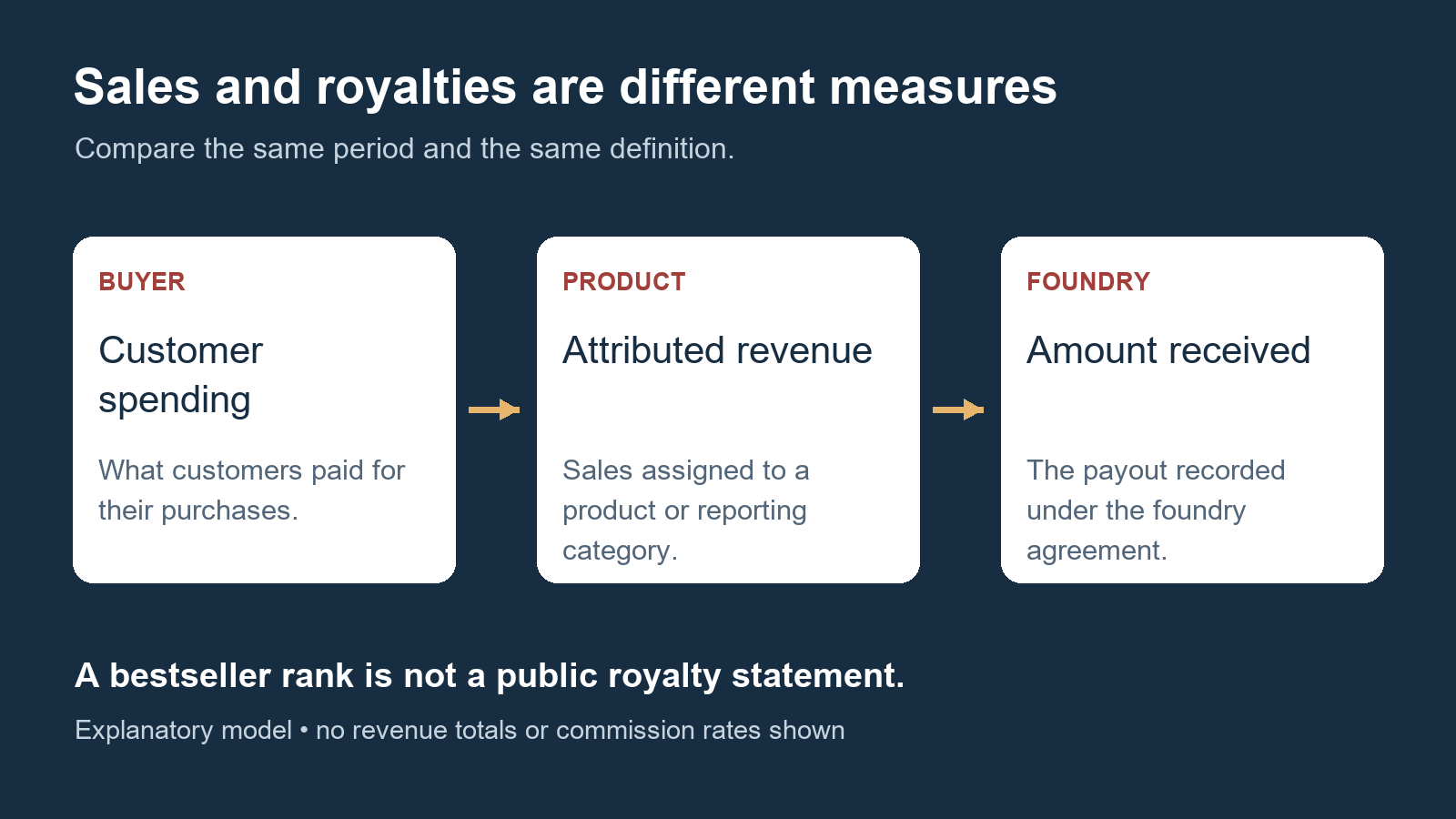
The money customers spend, the revenue attributed to a product, and the amount paid to a designer describe different stages of the transaction. A high position on a revenue-based list should not be read as a public royalty statement.
Monotype’s Earnings Reports documentation describes tools for foundries to inspect their own license sales and filter results by date. Those private records are the appropriate starting point for assessing an individual foundry’s performance.
The distinction is also important when comparing sales with subscription income. Monotype Fonts and MyFonts are different offerings: the former is a subscription and font-management service, while the latter is a digital commerce destination for font licensing. Combining every Monotype activity into a single “MyFonts sales” figure would obscure what is being measured.
What independent foundries can learn from MyFonts
The durable advantage is the connection between discovery and practical use. A buyer should be able to find the font, understand its strengths, evaluate the available styles, and make an informed purchasing decision.
For an independent foundry, that suggests a useful focus: create technically reliable fonts, build clear product pages, show convincing applications, and assess several months of results instead of judging a release from its launch-day peak.
At Lettersiro, we see that presentation task as part of the product. A buyer considering a script or display face needs to see how it behaves on a real-sized label, a readable sign, or a complete identity—not just a giant decorative word. Our font collection is another route for readers exploring those applications. That does not make one distribution channel the right answer for every buyer or every type designer.
MyFonts’ position is best explained by the combination: established demand, specialist discovery, a broad catalog, familiar purchasing habits, and concentrated distribution. Those strengths can support continuing sales. The evidence supports its importance as a font marketplace; each foundry still needs its own records to decide how stable the channel really is.
Editorial note: Sources checked November 10, 2026. This is independent analysis, not an audited market-share ranking. Product mockups are original AI-generated editorial concepts; diagrams are explanatory. The MyFonts screenshot records the site as viewed on that date.

